


The real question is quality.
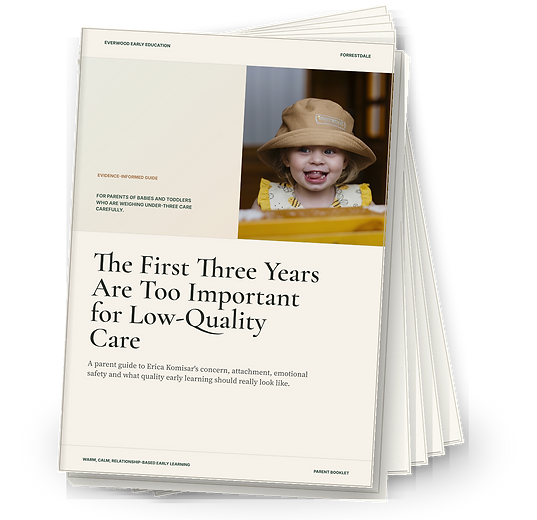
Parents are right to think carefully about childcare under three. Babies and toddlers need secure relationships, familiar adults, calm routines and responsive care. That is not an argument against early learning. It is an argument for choosing it carefully.
The better question is:
Is my child known, safe, comforted, supported, and understood here?

Watch the key moments


The first three years matter
Why early development sets the foundation for later learning and wellbeing.


The better question
Moving from “Is childcare good or bad?” to “What kind of care is this?”


Not just supervised. Known.
Children under three need relationships, not crowd management.

What quality means under three
Warm educators, emotional safety, responsive care, and language-rich environments.
What Australian research actually says
Small but meaningful long-term benefits of high-quality early learning.
Questions every parent should ask
A practical checklist for choosing baby and toddler care.

Educational Article

What does the research actually say about childcare under three?
Why parents worry about childcare under three
This concern is valid. Babies and toddlers are in a sensitive developmental stage where attachment, emotional safety, and consistency matter deeply.
The problem with asking “Is childcare good or bad?”
The research is more nuanced. The better question is not whether care exists—but whether it is high quality.
What quality care looks like for babies and toddlers
High-quality care means:
-
Warm, consistent educators
-
Familiar relationships
-
Calm, predictable routines
-
Responsive emotional support
-
Language and interaction throughout the day
-
Strong family communication
What the research says
International and Australian research consistently shows that quality matters more than setting alone. High-quality early learning can support development, especially when relationships are stable and responsive.


What parents should ask on a tour
-
Will my child be known here?
-
Will educators understand their cues?
-
Will they be comforted when upset?
-
Is the room calm and predictable?
-
Are families treated as partners?
How Everwood approaches under-three care
Everwood focuses on:
-
Relationship-based learning
-
Calm, low-chaos environments
-
Consistent educators
-
Strong family partnerships
-
Developmentally appropriate routines



The Under-3 Quality Question
A simple Guide for choosing care:

Will my child be known here?
Will educators learn their cues?
Will they be comforted when upset?
Is the environment calm?
Is language happening all day?
Are big emotions supported?
Will I be kept informed?
Does the service understand under-threes need slower, relational care?
